

 Send Inquiry
PP Fabricated Bend 60 Degree 45 Degree 30 Degree
Price 100.0 INR/ Piece
MOQ : 10 Pieces
PP Fabricated Bend 60 Degree 45 Degree 30 Degree Specification
- Application
- Industrial piping systems
- Pressure Ratings
- Suitable for low to medium pressure ratings
- Corrosion Resistant
- Yes
- Surface Finish
- Smooth
- Connection Type
- Socket or Fusion Weld
- Material Grade
- Standard grade PP
- Capacity
- 15000 Tons/year
- Features
- High durability smooth surface corrosion resistance
- Diameter
- 110 to 800 Millimeter (mm)
- End Type
- Plain End
- Usage
- Conveying corrosive liquids and gases plumbing systems
- Shape
- Angled / Bend (30 Degree 45 Degree 60 Degree)
- Pipe Type
- Bend
- Port Size
- Varies (standard options available)
- Material
- Polypropylene (PP)
- Dimension (L*W*H)
- 110 to 800 Millimeter (mm)
- Working Presssure
- Standard working pressure within PP specifications
PP Fabricated Bend 60 Degree 45 Degree 30 Degree Trade Information
- Minimum Order Quantity
- 10 Pieces
- FOB Port
- Nhava Sheva
- Payment Terms
- Cash Against Delivery (CAD), Cash on Delivery (COD), Cash Advance (CA), Cash in Advance (CID)
- Delivery Time
- 3 Week
- Sample Policy
- Contact us for information regarding our sample policy
- Packaging Details
- As per size and quantity
- Main Domestic Market
- All India
About PP Fabricated Bend 60 Degree 45 Degree 30 Degree
Standards
- Design: DIN 16962 PART-1
- MOC: PP (DIN8077/DIN8078)
- Pressure-Temperature Rating: PN4 to PN20 (SDR21 to SDR7.4)
- End Preparation: Plain Ends
- Test Method: DIN16962/DIN8078
Features
- Suitable for underground pipes through the adjustment to local ground movement
- Excellent Chemical Resistance: Increases reliability and scope of use
- High Thermal Resistance: Less vulnerable to weathering
- High-Stress Crack Resistance: Prevents inching growth of cracks
- Excellent Fusion Capabilities: Ease of installation
- Low density, Low weight: Ease of transportation
- Homogenous structure: Aesthetically superior
- Good elasticity: Easy installation
- Non-Toxic, Food Grade
Featured List of Applications
- Acid Fillings Stations
- Laboratories
- Automotive Industry
- Nuclear Research Centres
- Chemical Industry
- Paper & Pulp Mills
- Construction (Plumbing)
- Pharmaceutical Industry
- Desalination Plants
- Pickling Lines
High Durability for Industrial Demands
Crafted from standard grade PP, these fabricated bends exhibit robust mechanical strength, allowing them to withstand aggressive chemicals and varying pressure conditions. Their corrosion-resistant properties ensure long-term reliability, reducing maintenance requirements and downtime in industrial piping infrastructure.
Precision Engineering for Seamless Fit
Each bend features a smooth surface finish and precise angle configuration-30, 45, or 60-ensuring seamless integration into new or existing piping systems. Plain end construction enables secure connections through either socket fit or fusion welding, adapting to standard piping sizes for convenient installation.
Versatile Applications in Corrosive Environments
Designed for conveying corrosive fluids and gases, these PP bends are extensively used in chemical, pharmaceutical, and water treatment plants. Their resistance to most acids and alkalis makes them the component of choice in challenging industrial environments where longevity and safety are paramount.
FAQ's of PP Fabricated Bend 60 Degree 45 Degree 30 Degree:
Q: How are PP Fabricated Bends installed in industrial piping systems?
A: PP Fabricated Bends with plain ends can be installed using either socket fitting or fusion welding methods, depending on system requirements. Both connection types ensure a secure, leak-proof joint suitable for conveying corrosive fluids or gases.Q: What applications are suitable for these PP bends?
A: These bends are specifically designed for industrial systems transporting corrosive liquids or gases, such as chemical processing plants, water treatment facilities, and other industries requiring robust and chemical-resistant piping solutions.Q: When should I select a 30, 45, or 60 bend?
A: The choice of bend angle depends on the required directional change in your piping layout. Use 30, 45, or 60 bends to efficiently adjust the flow direction, minimize pressure loss, or conform to space constraints in the piping system.Q: Where do these bends provide maximum benefit?
A: Their superior corrosion resistance and durability make them ideal for regions within piping systems that are exposed to harsh chemicals or corrosive gases, helping extend the system's service life and maintain operational safety.Q: What is the process for fabricating these PP bends?
A: The bends are manufactured using fabrication techniques involving precision cutting and welding of polypropylene pipes, followed by quality checks to ensure smooth surface finishes, proper angles, and integrity suitable for industrial standards.Q: How does the smooth surface finish contribute to system performance?
A: A smooth interior surface reduces frictional resistance, ensuring efficient fluid flow, minimizing pressure drop, and preventing deposition or buildup, which is critical in maintaining the integrity of industrial plumbing systems.Q: What benefits do these bends offer over traditional metal counterparts?
A: Unlike metal bends, PP bends are lightweight, highly resistant to corrosion, and chemically inert, making them cost-effective and low-maintenance for industries dealing with aggressive fluids. Their ease of installation further enhances their operational advantage.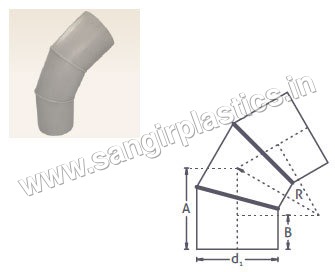
Tell us about your requirement

Price:
Quantity
Select Unit
- 50
- 100
- 200
- 250
- 500
- 1000+
Additional detail
Mobile number
Email

More Products in Sangir Products Category
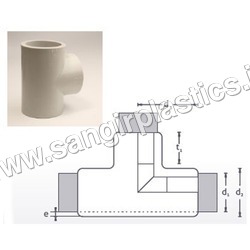
PP Moulded Tees Equal
Price 100.0 INR / Piece
Minimum Order Quantity : 10 Pieces
Application : Plumbing, Irrigation, Water Supply, Industrial Pipelines
Connection Type : Socket/Slip Fit
Corrosion Resistant : Yes
Surface Finish : Smooth, Glossy
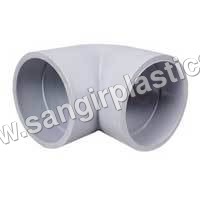
PPH Elbow 90 Degree
Price 100.0 INR / Piece
Minimum Order Quantity : 10 Pieces
Application : Industrial Piping Systems
Connection Type : Socket Weld
Corrosion Resistant : Yes
Surface Finish : Smooth
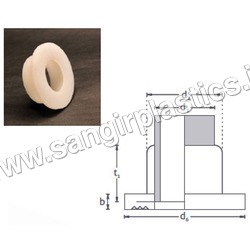
PVDF Stubend Flange Adaptor
Price 100.0 INR / Piece
Minimum Order Quantity : 10 Pieces
Application : Chemical Processing, Water Treatment, Industrial Piping
Connection Type : Flanged
Corrosion Resistant : Yes
Surface Finish : Smooth, High Gloss
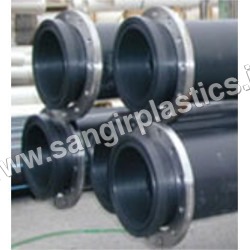
HDPE Dredge Pipes
Price 100.0 INR / Piece
Minimum Order Quantity : 1000 Pieces
Application : Dredging, slurry transport, sand & mud conveying
Connection Type : Flange Joint / Welded Ends
Corrosion Resistant : Yes
Surface Finish : Smooth/Polished

Contact Details 
SANGIR PLASTICS PVT. LTD.
GST : 24AABCS3737J1ZC
GST : 24AABCS3737J1ZC

- Survey No. - 146/p-2 and 114/p1, near Raymond Limited, Motiwada,Valsad - 396125, Gujarat, India
- Phone : 08045816055

- Mr. Vivek Adsule (Sr. Executive Exports)
- Mobile : 08045816055
- Send Inquiry
 Send Inquiry
 Send Inquiry
 Send SMS
 Call Me Free
Quick Links
Our Product

SANGIR PLASTICS PVT. LTD.
All Rights Reserved.(Terms of Use)
Developed and Managed by Infocom Network Private Limited.
Developed and Managed by Infocom Network Private Limited.

